Spray foam insulation and your mortgage: what homeowners should know
Lenders and surveyors treat spray foam differently from every other insulation. Here is what they look for and how removal works.

The short version
- The mortgage issue is about inspection: spray foam hides the roof timbers a surveyor needs to see.
- Closed-cell foam is denser, harder to remove and more likely to be treated as a material problem.
- Removal is mechanical and contained, and it exposes the roof so it can be properly inspected.
- No removal contractor can guarantee a lender's decision, so speak to your lender or broker alongside the survey.
Why lenders ask about it
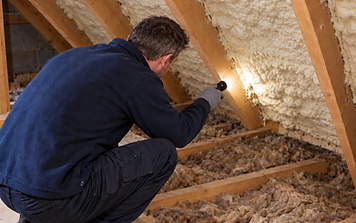
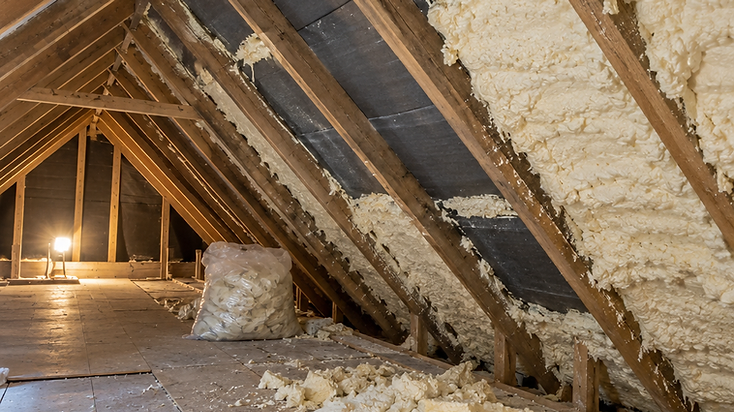
Spray foam is applied as a liquid and expands to fill the space, which means it hides whatever is behind it. A valuer cannot easily confirm the condition of the roof timbers, the felt or the wiring underneath, and lenders dislike lending against something they cannot inspect.
That is the heart of the issue. It is not that spray foam is always a defect, it is that it prevents the checks a mortgage valuation depends on.
What a surveyor cannot see
Under a layer of closed-cell foam, problems can sit undetected: a slow leak, a rotten rafter, a cracked tile above. Repairs also become harder once the foam has to be cut away before the timber can be worked on.
Where a leak has gone unnoticed for a long time, joists can lose strength. That is a structural concern rather than a comfort one, and it is why surveyors flag it.
Open-cell and closed-cell
Open-cell foam is softer and more vapour-open, and is generally viewed as less problematic. Closed-cell foam is denser, gives a higher insulation value per millimetre, and is considerably harder to remove.
Both can attract the same question from a lender, but closed-cell foam is more likely to be treated as a material issue.
What removal actually involves
Removal is a mechanical process. We work section by section, taking the foam back from the timbers using a combination of tooling and careful hand work, keeping dust contained as we go.
Once the foam is off, the exposed timbers and roof covering can be inspected properly. That inspection often turns up something that was hidden, which is far better to know before a buyer's surveyor finds it.
We cannot guarantee how any individual lender will assess a property, before or after removal. What we can do is remove the material, report on what we find, and leave the roof in a condition that can be inspected and insulated properly.
Timing, if a sale is involved
If you are selling, the question is whether to deal with the foam before going to market or to price it in. Buyers' surveyors commonly raise it, and a committed buyer will ask for it to be removed or for money off.
Removing it before listing takes the argument off the table, removes the uncertainty from the valuation and lets the next owner see exactly what they are buying.
Putting proper insulation back
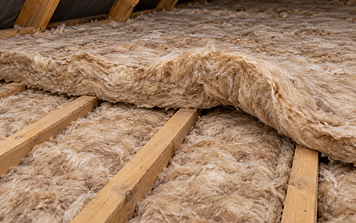
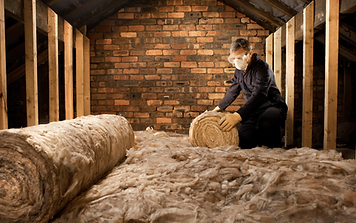
Once the foam is gone, the loft needs to perform again. Depending on headroom and ventilation, that usually means a loft insulation refresh in mineral wool, or SuperQuilt where depth is tight.
Done properly, the replacement insulates without trapping moisture or hiding the structure.
Where to start
- Spray foam removal explains the process, containment and what happens to the material.
- Book a survey for an assessment of your roof and a written explanation of your options.