How much loft insulation does a UK home actually need?
The recommended depth, what a top-up costs, what it saves, and the cases where adding more material is simply a waste of money.

The short version
- Around 270mm of mineral wool is the practical target for a UK loft, laid in two layers across the joists.
- Coverage and airtightness matter as much as depth, because gaps cancel out extra material.
- A normal top-up on a three-bedroom home is usually a job in the low hundreds of pounds, not a large project.
- If the existing insulation is damp, or a loft conversion is planned, adding more is often the wrong move.
The figure most installers work to
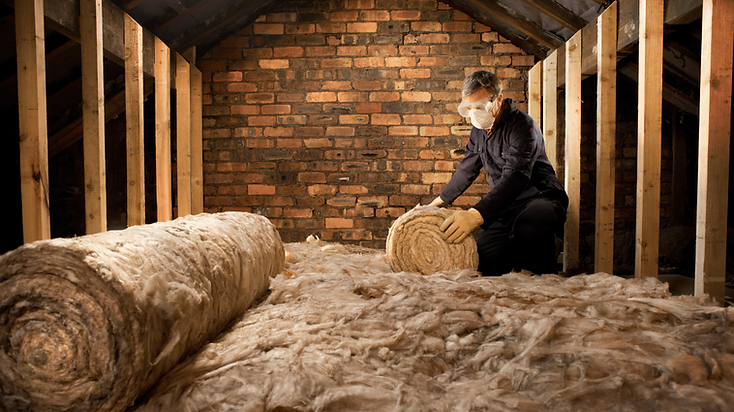
The long-standing recommendation for a UK loft is around 270mm of mineral wool, laid in two layers so the upper layer runs across the joists rather than only between them. In practice that means roughly 100mm in the joist depth and 170mm over the top.
It is not a legal requirement for a homeowner. It is the depth at which the extra saving from adding more material starts to flatten out, which is why it is used as the practical target.
Why depth is not the only target
Insulation performs only as well as the space around it allows. Compressed wool, gaps at the hatch, unsealed downlights and cold air blowing in at the eaves all pull performance down, however deep the material is.
When we measure a loft we look at coverage and airtightness before we talk about millimetres.
What it costs
On a typical three-bedroom semi with some insulation already in place, a top-up is usually a job in the low hundreds of pounds rather than the thousands. Access, the quantity of material needed, whether boards have to be lifted and how much clearing is involved all move the figure.
If the existing insulation is damp, contaminated or has to be removed first, the cost is different, and we explain why rather than folding it into a single number.
When topping up is not worth it
There are times when adding insulation is not the right answer. If a loft conversion is planned, the ceiling is likely to be rebuilt anyway. If the real problem is a leaking roof or a ventilation defect, new insulation will simply get wet. If the loft is used for storage and heavily boarded, wool will be compressed underfoot and lose much of its value.
In those cases we say so and suggest what to do instead, which might be a multifoil product that performs in less depth, or fixing the water problem first.
Cheaper things to do first
Sealing and insulating the loft hatch, fitting covers over downlights, and closing obvious draughts at the eaves are low-cost jobs that often make a noticeable difference on their own.
They also help the insulation work properly once it is fitted, so it is rarely wasted effort.
Where to start
- Loft Insulation Refresh covers a top-up or replacement, including clearing and disposal.
- SuperQuilt insulation suits lofts with limited headroom.
- Book a home survey if you would rather have someone look before spending anything.