Exterior wall and roof coatings: what they do and when they help
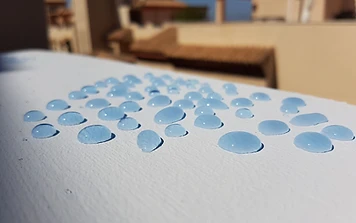
Breathable water repellent coatings are not a cure for damp. Used in the right place, they stop rain soaking into brickwork and tiles.
The short version
- Breathable water repellents keep rain out while letting the wall dry outwards; impervious sealants trap moisture.
- They help most on porous, exposed walls and roofs suffering algae, moss or frost damage.
- They do not fix rising damp, leaks or damaged flashing, and should never be used to hide them.
- Preparation and correct application matter as much as the product itself.
What these coatings do
Exterior coatings are applied to brickwork, render, stone or roof tiles to stop water soaking in. The surface stays dry, so it dries out faster after rain and is less likely to support algae, moss or frost damage.
The best of them are breathable. They repel liquid water while still allowing vapour to pass out of the wall, which matters because a wall that cannot dry outwards traps moisture inside the structure.
Why breathability matters
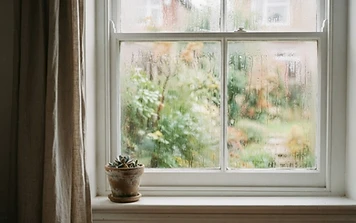
A sealed wall is a wet wall in waiting. If water vapour from inside the building cannot escape through the external surface, it accumulates, and that shows up as damp patches, blown plaster, spalling brick faces or frost damage.
That is the key difference between a modern water repellent and an old-fashioned waterproof sealant, and it is why the product matters as much as the application.
Where they genuinely help
- Walls and roofs exposed to wind-driven rain, particularly on the coast or on an exposed elevation.
- Porous substrates such as older brick, lime render, sandstone and clay tiles that soak up water quickly.
- Properties with recurring green algae or moss growth, which keeps surfaces damp and looks tired.
- Pre-1930s homes, where the wall has to keep breathing.
Where they do not help
A coating is not a cure for the cause of rising damp, a leaking gutter, failed flashing or a damaged roof. If water is getting in through a defect, coating the surface around it hides the symptom and lets the damage continue.
If a wall is already saturated with a salt problem, or has been sealed with an impervious paint, coating it will not fix the underlying condition. We would say so at the survey rather than sell the work.
Wall coatings and roof coatings
Wall products work on masonry: facade coatings for a uniform finish on render and brick, masonry creme for deep penetration into porous surfaces, and water repellents for a clear, invisible treatment that leaves the appearance of the wall unchanged.
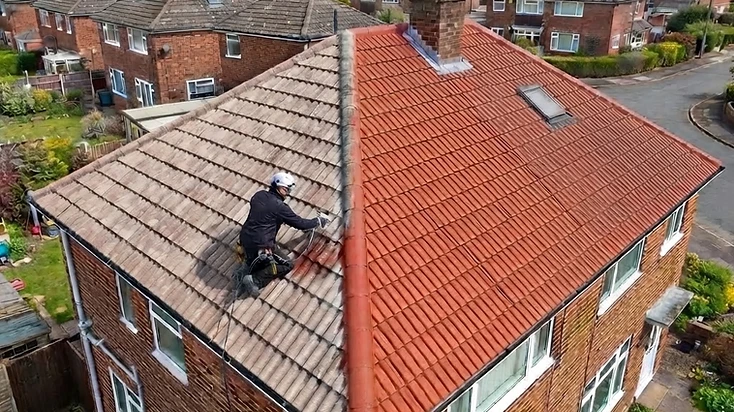
Roof coatings are formulated for tiles and mineral surfaces, holding colour while protecting against water absorption and frost. They are a protective treatment for a sound roof, not a repair for a failed one.
What the work involves
Preparation is most of the job. Surfaces are cleaned, algae and loose material are removed, and any repairs are made first. The coating is then applied by sprayer or brush in the recommended number of coats, with drying time between them.
Where a coating is part of a wider heat-loss plan, it is worth doing the survey first, because the order of work affects both the cost and the result.
Where to start
- Exterior coatings covers the full range we install and what each one is for.
- ProPERLA water repellent keeps the look of the wall while repelling rain.
- RENOTEC roof coating protects roof tiles and restores colour.
- Book a survey if you are not sure whether the problem is the surface or a defect behind it.